
Literature review
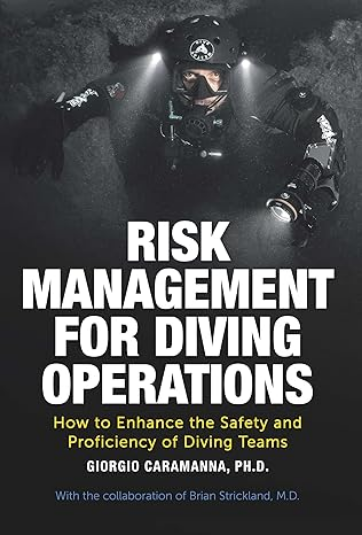
Risk Management for Diving Operations: How to enhance the safety and proficiency of diving teams
(2024, English Edition)
Giorgio Caramanna (Author), Brian Strickland (Contributor)
Risk Management for Diving Operations is an essential source for Dive Supervisors and great value to any professional/science diver's working library." Ed O’Brien, Dive Operations Manager, Woods
Hole Oceanographic Institution.
This is a long overdue and often ignored topic in the Recreational diving world that needs to be understood and applied; this book will enable that to happen." Phil Short. Dark Water Exploration
Ltd. Explorers Club Fellow. Fellow of the Royal Geographical Society. This book will assess the best risk management strategies for diving operations, filling some critical gaps in knowledge in
this subject and providing a sound and scientific approach to the proposed theme.
No “zero risk” activities exist, but we should aim for a “zero accident” goal. Divers are exposed to risks of different natures. Some are related to the divers’ actions and other human factors
involved in the operations. Others originate from the challenging underwater environment in which divers operate.
The book is structured into 14 chapters, each assessing a specific risk. Each chapter is supported by an extensive bibliography with cross-references within the text, making it easy for the
reader to access the specific bibliographical element. The risks covered include the ones linked to human factors, including stress, panic, fatigue, and loss of situational awareness, and those
related to the diving environment, including cold, polluted water, depth, DCS, oxygen toxicity, and visibility. A summary of the main topics is provided at the beginning of each chapter, allowing
for a quick overview of the presented arguments. A “lesson learned” section will provide practical advice based on the information presented at the end of each chapter. Some diving accidents have
been analyzed following a specific method aimed at identifying the root causes of the accident and how the accident could have been avoided. The final chapters describe how to develop a sound and
safe diving plan and a comprehensive risk assessment.
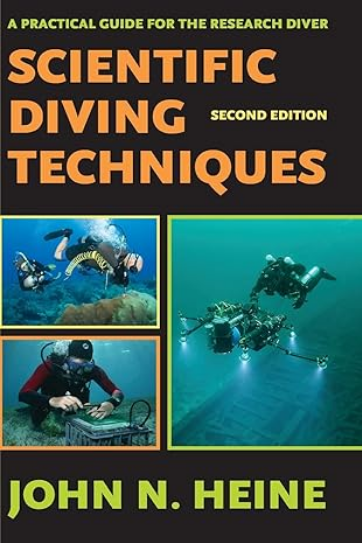
Scientific Diving Techniques: A Practical Guide for the Research Diver
Copertina flessibile – 9 giugno 2017
Edizione Inglese di John N. Heine (Autore)
This newly updated and revised second edition of John Heine's Scientific Diving Techniques covers the details of research methods underwater. Included are general scientific diving guidelines, an
overview of aquatic habits and ecosystems, specialized diving equipment and procedures, locating and marking study sites, archaeology, measuring physical and biological factors, underwater
experimentation and underwater photographing and videography for the scientist. There are over 500 references to original scientific techniques. Also included are training exercises to aid Diving
Safety Officers in training scientific divers.